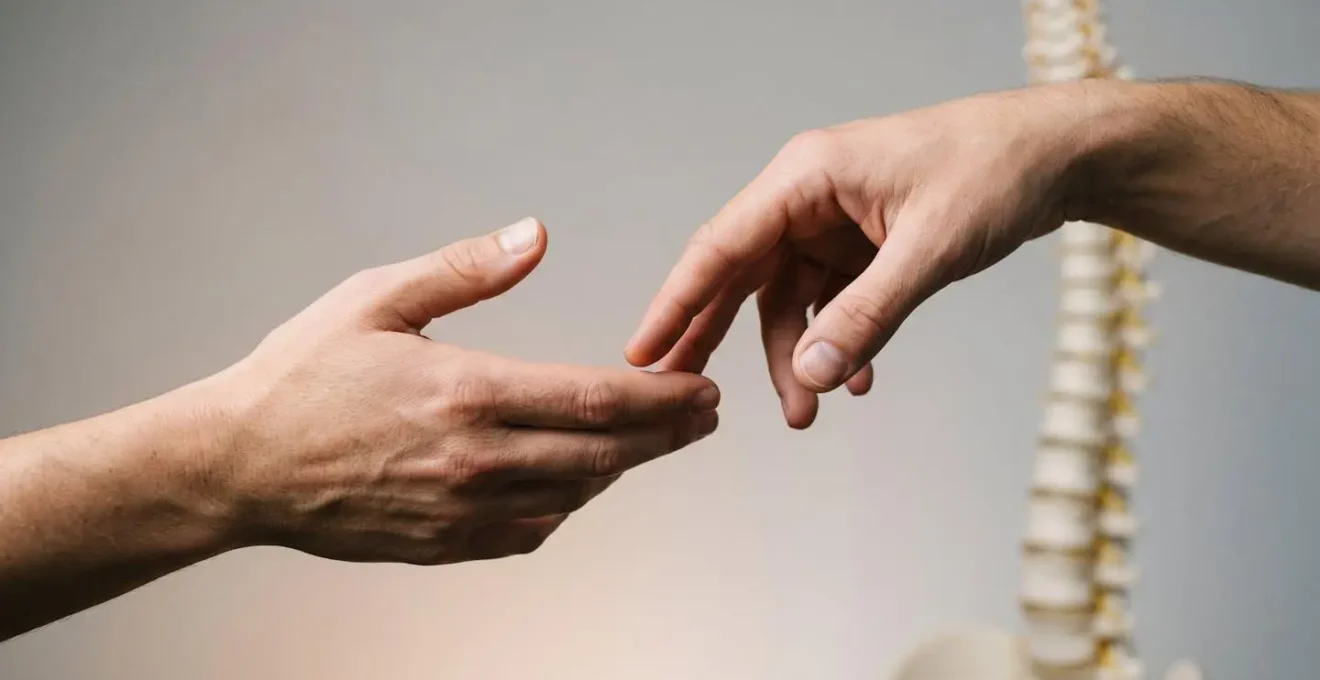
The true difference between osteopathy and chiropractic isn’t about ‘back cracking’ versus gentle touch; it’s about the fundamental therapeutic goal.
- Osteopathy focuses on restoring the body’s integrated systems—especially fluid dynamics and fascial connections—to empower its natural ability to self-heal and self-regulate.
- Chiropractic often concentrates on correcting specific spinal ‘subluxations’ to remove interference in the nervous system.
Recommendation: For those seeking not just pain relief but a holistic reset aimed at building long-term systemic resilience and functional autonomy, the osteopathic approach offers a more comprehensive path.
When seeking relief from structural pain, many patients find themselves at a crossroads: osteopathy or chiropractic? The surface-level debate often revolves around techniques—the high-velocity “cracks” associated with chiropractors versus the seemingly gentler mobilizations of osteopaths. This distinction, while partially true, misses the core philosophical difference that dictates the entire treatment journey and, ultimately, the potential for long-term health.
Both disciplines are effective manual therapies that address musculoskeletal complaints. However, their foundational premises diverge significantly. Chiropractic care is often rooted in the concept of the spinal subluxation, a misalignment proposed to interfere with nerve function. The goal is precise: identify the subluxation, correct it, and restore nervous system integrity. The osteopathic view, by contrast, is broader and more integrated. We see the body as a unified, self-regulating system where structure and function are reciprocally interrelated. The problem isn’t just a bone out of place; it’s a disruption in the body’s overall mechanics and fluid dynamics—the flow of blood, lymph, and cerebrospinal fluid that nourishes and cleanses every tissue.
But what if the true key to lasting mobility and health isn’t just correcting a structural fault, but restoring the body’s innate capacity for autoregulation? This is the central promise of the osteopathic approach. It’s a shift from practitioner-as-mechanic to practitioner-as-facilitator, aiming to remove the barriers preventing the body from healing itself.
This article will deconstruct this fundamental difference by exploring specific clinical scenarios. We will move beyond the superficial debate of techniques to understand how each philosophy translates into tangible outcomes for everything from infant care and post-accident recovery to chronic pain management, empowering you to choose the path best aligned with your long-term wellness goals.
To navigate this complex comparison, we will examine the core principles and applications of osteopathic treatment through a series of specific questions. This structure will provide a clear understanding of how an osteopath thinks and works, revealing the systemic approach that defines the practice.
Summary: Osteopathy vs. Chiropractic: A Deep Dive into Long-Term Functional Health
- Can Gentle Head Touching Really Fix Migraines in Babies?
- Why Massaging The Stomach Helps Release Lower Back Pain?
- How Soon After A Car Accident Should You See An Osteopath?
- Velocity vs Amplitude: Is Spinal Manipulation Safe For Elderly Bones?
- How To Reset Your Pelvis Alignment At Home Between Visits?
- Manipulation or Strengthening: Which Therapy Fixes The Root Cause?
- When Does Rapid Head Growth Signal Hydrocephalus?
- How To Manage Chronic Neck Pain Without Relying On Painkillers?
Can Gentle Head Touching Really Fix Migraines in Babies?
Cranial osteopathy is perhaps one of the most misunderstood and debated areas of manual therapy. The practice involves very gentle, subtle pressure applied to the skull and sacrum to influence the fluctuation of cerebrospinal fluid and release tension in the intricate network of membranes surrounding the brain and spinal cord. For a baby who has experienced the compressive forces of birth, these tensions can manifest as irritability, feeding difficulties, or symptoms that mimic migraines. The therapeutic intention is not to “fix” the bones of the skull, but to restore a state of balanced tension and fluid motion, allowing the infant’s system to function optimally.
The controversy surrounding cranial osteopathy often stems from a lack of large-scale, high-quality clinical trials. Critics rightly point out that the evidence base is still developing. However, the clinical experience of many practitioners and parents tells a different story. The focus is on improving the overall function and comfort of the baby. For example, some research has shown tangible benefits in related areas. A randomized controlled trial on children with cerebral palsy found that 38% in the osteopathic treatment group reported improved global health compared to only 18% in the control group. This suggests that these gentle techniques can have a measurable systemic effect.
While we must be cautious with claims, the osteopathic approach here is a classic example of our philosophy: use the least invasive force necessary to encourage the body’s own autoregulation. It is a dialogue with the tissues, not a command. For a delicate infant system, this low-impact, high-feedback approach is often the most appropriate and effective way to restore balance and relieve distress.
Why Massaging The Stomach Helps Release Lower Back Pain?
The idea that treating the abdomen can alleviate low back pain perfectly illustrates the osteopathic principle of systemic integration. From a purely mechanical viewpoint, the two areas seem unrelated. However, an osteopath sees a web of interconnected tissues, primarily the fascia—a continuous sheath of connective tissue that wraps around every organ, muscle, and bone. The organs of the abdomen (the viscera) are not floating freely; they are suspended by ligaments and fascial sheets that attach directly to the spine, pelvis, and diaphragm.
Inflammation, surgery (like a C-section), poor posture, or even emotional stress can cause this visceral fascia to become tight and restricted. These restrictions create a pulling force, much like a snag in a sweater, that can translate into strain on the lumbar spine. This can lead to persistent low back pain that doesn’t respond to direct treatment of the back muscles or joints because the root cause is anterior. Visceral manipulation is the osteopathic practice of gently mobilizing the organs and their fascial attachments to release these deep-seated tensions. By restoring mobility to the gut, we can directly reduce the mechanical load on the spine.
This paragraph introduces the concept of the fascial connection between the abdomen and the lower back. The illustration below helps visualize this intricate anatomical relationship, showing how internal structures can directly influence the musculoskeletal frame.
As this image suggests, the body is a tensegrity structure where tension in one area is distributed throughout the system. The effectiveness of this approach is supported by clinical research, moving it from a theoretical concept to an evidence-informed practice.
Case Study: Visceral Manipulation for Chronic Low Back Pain
To illustrate this, consider a double-blind randomized controlled trial involving patients with chronic low back pain and visceral dysfunction. The results showed that the group receiving visceral manipulation in addition to physical therapy experienced significant improvements in lumbar mobility and function compared to the group receiving physical therapy alone. The study concluded that addressing the visceral component was a key factor in achieving these superior outcomes, which were maintained even after the treatment concluded.
How Soon After A Car Accident Should You See An Osteopath?
The ideal time to see an osteopath after a car accident is as soon as possible, provided any life-threatening injuries have been ruled out by emergency medical services. The common “wait and see” approach is often a mistake. Immediately following a whiplash-type injury, the body goes into a state of shock and protective muscle guarding. While you might not feel the full extent of the pain right away due to adrenaline, the underlying tissue damage and inflammation have already begun.
Waiting days or weeks allows these initial dysfunctions to become entrenched. The body begins to compensate for the injury, creating patterns of strain throughout the musculoskeletal system. A minor neck injury can lead to shoulder pain, headaches, or even low back problems as the body’s fascial and muscular chains adapt to the new, dysfunctional pattern. Early osteopathic intervention aims to interrupt this cascade.
The goal in the acute phase is not aggressive manipulation. Instead, an osteopath will use gentle soft tissue techniques, mobilization, and fluidic approaches to:
- Reduce inflammation by improving lymphatic and venous drainage from the injured area.
- Decrease muscle spasm and guarding to restore more normal movement.
- Prevent the formation of adhesions and chronic restrictions in the fascia.
This early, gentle treatment helps to guide the body’s natural healing process in a more organized and efficient way. As Patient.info’s medical team notes, the osteopathic goal is to “re-balance the body’s structure in a way that enhances blood flow and nerve function.” By intervening before compensatory patterns set in, we can significantly reduce the likelihood of the injury becoming a chronic problem and shorten the overall recovery time.
Velocity vs Amplitude: Is Spinal Manipulation Safe For Elderly Bones?
This is a critical question and highlights a key aspect of the osteopathic approach: adaptability. The safety of spinal manipulation in older adults, especially those with osteoporosis or degenerative changes, is not about the technique itself, but about the practitioner’s ability to modify it. The common image of a high-velocity, low-amplitude (HVLA) thrust—the classic “crack”—is just one tool in a vast toolkit. For a patient with compromised bone density, applying such a force would be inappropriate and unsafe.
An osteopath’s training emphasizes diagnostic skill and a deep understanding of biomechanics, allowing us to choose the right tool for the right patient. Instead of a high-velocity thrust, we might use:
- Articulation and Mobilization: Gentle, rhythmic movements that take a joint through its range of motion to improve mobility and fluid flow without any thrusting.
- Muscle Energy Technique (MET): A technique where the patient actively contracts their muscles against a precise counterforce from the practitioner. This uses the body’s own muscular effort to realign joints and release tension, making it exceptionally safe.
- Functional and Counterstrain Techniques: Positioning the body or a specific area in a position of maximum ease to allow the tissues to “reset” their neural signaling, releasing chronic tension without force.
The core principle is adjusting the velocity and amplitude of the technique to match the tissue’s health and the patient’s condition. A young, healthy athlete may benefit from a quick, specific HVLA thrust. An 80-year-old with osteoporosis will receive a treatment that is entirely different in character but identical in its therapeutic intention: to restore function. This adaptability is what makes osteopathic treatment fundamentally safe for individuals of all ages and physical conditions. It’s not about avoiding manipulation; it’s about applying the right kind, at the right time, with the right intention.
How To Reset Your Pelvis Alignment At Home Between Visits?
Empowering patients to manage their own bodies between sessions is a cornerstone of the osteopathic philosophy. This principle is beautifully captured by the mantra, “find it, fix it, leave it alone.” Our role is to identify and correct the primary dysfunction, but the ultimate goal is to help the body regain its own stability so that it “stays fixed.” Providing home exercises is a crucial part of this process, turning passive treatment into an active partnership.
The pelvis, being the foundation of the spine, is an area where minor misalignments can have widespread effects. While complex rotations require a practitioner’s hands, many imbalances can be managed and maintained at home with simple, targeted exercises. These are not general fitness exercises; they are specific movements designed to re-educate muscles and restore balanced tension around the sacroiliac joints and pubic symphysis.
Osteopaths tend to use the mantra ‘find it, fix it, leave it alone’. This refers to the ability to find a problem, fix a problem, and leave it alone (sending you on your way).
– Surrey Physio Clinical Team
One of the most effective ways to do this is by focusing on the deep stabilizing muscles of the core and pelvis. The following illustration depicts a common type of stabilization exercise that helps to create balanced tension through the pelvic girdle.
The key to these exercises is precision over power. It’s about activating the correct muscles in the correct sequence to restore the body’s natural corset. A simple home program can dramatically improve outcomes and reduce the frequency of necessary visits, fostering true patient autonomy.
Action Plan: Your 5-Point Pelvic Stability Self-Audit
- Breathing Foundation: Lie on your back with knees bent. Practice diaphragmatic breathing, feeling your low belly and pelvic floor gently expand on the inhale and engage on the exhale. This is the base for all stability.
- Transversus Abdominis Activation: In the same position, gently draw your hip bones toward each other as if tightening a corset, without holding your breath or moving your spine. Hold for 5-10 seconds. This isolates your deep core muscle.
- Glute Bridge Assessment: Perform a slow, controlled bridge. Do you feel your glutes and hamstrings working together, or does one side dominate? Does your pelvis stay level, or does it twist? Note any asymmetry.
- Single Leg Stance Test: Stand in front of a mirror and lift one foot off the ground. Does your hip on the standing side jut out? Does your pelvis drop on the lifted side? This reveals weakness in your lateral hip stabilizers (like the gluteus medius).
- Symmetry Check: Sit on a firm chair and then stand up, paying close attention to whether you push off evenly with both feet and engage both glutes equally. Chronic preference for one side is a key indicator of imbalance.
Manipulation or Strengthening: Which Therapy Fixes The Root Cause?
The debate between passive care (manipulation) and active care (strengthening) often presents a false choice. The most effective and lasting solution for most chronic musculoskeletal issues is not one or the other, but a judicious and sequential combination of both. Each approach addresses a different component of the problem, and true root-cause resolution requires attending to both the hardware and the software of the body.
Manual therapy (manipulation, mobilization) is excellent for addressing the “hardware” problem: a joint that is restricted, a fascia that is bound, or a muscle that is in spasm. It is a powerful tool for breaking the cycle of pain and dysfunction, restoring mobility, and improving the local tissue environment. Its effects are often immediate, providing a window of opportunity where movement becomes less painful. However, if the underlying “software”—the poor motor control, muscle imbalances, and faulty movement patterns that led to the problem—is not addressed, the hardware will likely fail again.
This is where therapeutic exercise comes in. Strengthening and motor control retraining addresses the “software” by teaching the body how to use its newfound mobility correctly and sustainably. It builds resilience and provides the long-term stability that prevents recurrence. An osteopathic treatment plan is designed to integrate these two elements. We “fix” the restriction with manual therapy, then “leave it alone” by prescribing the specific exercises needed to maintain that fix. This combination provides the best of both worlds: rapid pain relief and long-term functional improvement.
The following table, based on an analysis of clinical evidence, breaks down the distinct roles and benefits of each approach, clarifying why a combined strategy is often superior for comprehensive care.
| Treatment Approach | Short-term Pain Relief | Long-term Effectiveness | Functional Improvement | Best Application |
|---|---|---|---|---|
| Manual Therapy (Spinal Manipulation, Mobilization) | Significant | Effects can diminish over time if not supported | Moderate | Unlocking restricted joints, acute pain relief |
| Therapeutic Exercise | Gradual improvement | Sustained with adherence | High with progressive loading | Motor control retraining, preventing recurrence |
| Combined Approach (MT + Exercise) | Optimal | Most sustainable | Highest reported outcomes | Comprehensive care for chronic conditions |
As this comparative analysis of treatment approaches shows, combining manual therapy with exercise yields the highest outcomes for both functional improvement and sustainable, long-term effectiveness, truly addressing the root cause from all angles.
When Does Rapid Head Growth Signal Hydrocephalus?
This question moves from the realm of musculoskeletal dysfunction into that of serious pathology, and it highlights one of the most critical roles of any primary contact manual therapist: the ability to recognize “red flags.” A red flag is a sign or symptom that suggests the patient’s condition may not be a simple mechanical issue and could indicate a more serious underlying disease that requires urgent medical referral. Our primary responsibility is “first, do no harm,” and that begins with a thorough screening process.
In an infant, rapid, disproportional head growth is a major red flag for hydrocephalus, a condition involving an abnormal buildup of cerebrospinal fluid in the brain. While an osteopath might be seeing the baby for an issue like torticollis (wry neck) or feeding difficulties, we are trained to observe the whole patient. We would note the head circumference, the state of the fontanelles (the soft spots on the skull), the infant’s eye movements (a “sun-setting” gaze is a classic sign), and their overall neurological status.
If any of these signs are present, the osteopathic treatment is immediately halted. The correct action is not to attempt a manual “fix,” but to communicate our concerns clearly and calmly to the parents and ensure they seek immediate medical evaluation from a pediatrician or emergency department. This is not a failure of osteopathy; it is the system working correctly. Our deep knowledge of anatomy, physiology, and pathology allows us to function as a crucial part of the wider healthcare ecosystem.
Manual therapists are skilled at identifying ‘red flags’. During any examination (even for a simple neck pain), they are constantly screening for signs of serious pathology that require medical referral.
– General Chiropractic Council (GCC)
This duty of care builds immense trust. Patients need to know that their practitioner is not only skilled in their own modality but also has the wisdom and professional responsibility to know its limits and when a different path of care is required.
Key Takeaways
- The core difference is philosophy: Osteopathy aims to restore systemic autoregulation, while chiropractic often focuses on specific spinal adjustments.
- Osteopathic treatment is highly adaptable, using a wide range of techniques from gentle cranial work to robust mobilization, making it safe for all ages.
- True long-term healing often requires a combination of passive manual therapy to restore mobility and active therapeutic exercise to maintain stability.
How To Manage Chronic Neck Pain Without Relying On Painkillers?
Managing chronic neck pain effectively requires moving beyond a symptom-based approach. Painkillers, while sometimes necessary for acute flare-ups, only mask the pain; they do nothing to address the underlying cause. A sustainable, long-term solution requires a strategy that restores function, improves tissue health, and reduces the mechanical strain that perpetuates the pain cycle. This is where the holistic osteopathic model excels.
An osteopathic assessment of chronic neck pain doesn’t just look at the neck. We examine the entire kinetic chain. Is the thoracic spine (mid-back) stiff, forcing the neck to become hypermobile and overworked? Is there a forward head posture driven by tight pectoral muscles and a weak upper back? Are there old shoulder injuries or even visceral restrictions from the diaphragm creating a downward pull? The source of chronic neck pain is rarely in the neck alone. Our treatment plan is therefore multi-faceted, aiming to:
- Restore mobility to restricted areas in the thoracic spine, ribs, and shoulders to unload the cervical spine.
- Release fascial tension in the chest, shoulders, and base of the skull that pulls the head into a forward posture.
- Improve fluid dynamics—lymphatic and venous drainage—to reduce local inflammation and clear metabolic waste from chronically tight tissues.
- Prescribe specific exercises to strengthen the deep neck flexors and upper back extensors, correcting the postural imbalances that are the root cause.
This approach offers a clear alternative to dependency on medication. Evidence confirms its efficacy; a 2024 systematic review and meta-analysis found that manual therapy provided statistically significant and clinically important pain reduction for neck pain compared to oral pain medications, especially in the long term.
By treating the body as an integrated system and empowering the patient with tools for self-management, we create a path to genuine, lasting relief. The focus shifts from chasing pain to building a more resilient, better-functioning body that is less susceptible to it in the first place.
By understanding that the body is a single, interconnected unit, the choice between osteopathy and chiropractic becomes clearer. It’s a choice of therapeutic intent: Are you seeking to correct a specific structural fault for symptomatic relief, or are you looking to restore the entire system’s ability to self-regulate and heal for profound, long-term functional health?